


Blog
How Much Does A Pallet Of Sod Weigh?
Knowing the answer to “how much does a pallet of sod weigh?” is the single most important step for planning your landscaping project. This isn’t just a trivial detail; it’s the critical piece of data that determines your freight costs, the truck you need for pickup, and the safety of your team.
Guessing wrong is a costly mistake. Showing up with a half-ton truck for a 3,000-pound load wastes a day. Overloading your vehicle can lead to dangerous driving conditions and expensive suspension damage.
This guide provides the definitive answer. We will break down the exact weight ranges, explain why the weight changes so drastically, and ensure you have the correct numbers to plan your project safely and efficiently.
By Bulk Pallets
- Created on October 20, 2025 Updated on November 04, 2025.
Share
Author

Key Takeaways
Before you fire up the truck, understand these critical points. Getting the weight wrong isn’t a small mistake; it’s a safety hazard and a costly project delay.
The Standard Range: A typical full pallet of sod (450-500 sq. ft.) weighs between 2,500 and 3,000 pounds. However, the full range can be anywhere from 1,500 to over 3,500 pounds.
Moisture is Everything: The single biggest variable is water. A dry pallet might weigh 2,000 pounds, while the exact same pallet, when saturated from rain, can easily exceed 3,000 pounds.
Vehicle Match: You cannot safely transport a full pallet of sod with a standard car, SUV, or even a half-ton pickup (like an F-150). You need a heavy-duty, three-quarter-ton (F-250) or one-ton (F-350) truck.
Grass Type Matters: Denser, water-loving grasses like St. Augustine will almost always be heavier than lighter varieties like Bermuda or Zoysia.
Always Verify: These numbers are industry estimates. The only way to know for sure is to contact your supplier and ask for the specific harvest weight before you dispatch a vehicle.
Table of Contents
How Much Does A Pallet Of Sod Weigh?
How much does a pallet of sod weigh? is the most critical logistical question for any landscaping project. The answer directly impacts your freight costs, vehicle choice, and job site safety.
A full, standard-sized pallet of sod, which typically covers 450 to 500 square feet, weighs between 2,500 and 3,000 pounds (1.25 to 1.5 tons).
However, a “dry” pallet harvested during a drought could weigh as little as 1,500 pounds, while a pallet saturated by recent rain can top 3,500 pounds. Never assume a single average. The weight is a dynamic number based on several key factors you must consider.
To help you visualize the most common pallet sizes and their corresponding weight ranges, we’ve broken them down. This data is essential for communicating with a freight broker or planning a pickup.
| Pallet Size (Coverage) | Typical Weight Range (Dry) | Typical Weight Range (Saturated) |
| Half Pallet (~250 sq. ft.) | 1,000 – 1,300 lbs | 1,400 – 1,700 lbs |
| Standard Pallet (450 sq. ft.) | 2,200 – 2,600 lbs | 2,800 – 3,200 lbs |
| Standard Pallet (500 sq. ft.) | 2,400 – 2,800 lbs | 3,000 – 3,500+ lbs |
| Large Pallet (600+ sq. ft.) | 2,800 – 3,200 lbs | 3,600 – 4,000+ lbs |
Get An Accurate Freight Quote Today—Avoid Overloads And Costly Delays.
Plan every delivery with confidence using our instant freight calculator. Know your total weight, cost, and ROI before your truck ever leaves the yard.
What Factors Influence The Final Weight Of A Pallet Of Sod?
It’s tempting to look for one simple answer, but the final weight on your bill of lading is a moving target. Four main variables determine if your pallet is on the light or heavy side of the average.
Moisture Content: This is the most significant factor. Sod is soil, and soil acts like a sponge. A pallet harvested after a heavy rainstorm can be up to 50% heavier than one harvested from a dry field.
Square Footage: Pallets are not universally standardized. While 450-500 sq. ft. is common, some suppliers stack up to 600 or 700 sq. ft. Always confirm the total coverage you are buying.
Soil Composition: The dirt holding the roots together matters. A sandy loam soil, common in coastal areas, is significantly lighter than dense, heavy clay soil found in other regions. According to university agricultural extensions, soil density is a major factor in weight.
Harvesting Method: The “cut” of the sod—how much soil is taken with the roots—is set by the supplier. A thicker cut provides more soil for the roots but adds significant weight to every single piece.
These factors work in combination. The heaviest possible pallet would be a 500 sq. ft. order of St. Augustine, cut thick from a clay field after a thunderstorm. The lightest would be a 450 sq. ft. pallet of Bermuda from a sandy field during a dry spell.
| Influencing Factor | Low Weight Impact (Lighter) | High Weight Impact (Heavier) |
| Moisture | Harvested dry (no recent rain) | Saturated (harvested after rain) |
| Soil Type | Sandy or loam-based soil | Dense clay-based soil |
| Sod Cut | Thin cut (less soil) | Thick cut (1+ inch of soil) |
| Grass Type | Fescue, Bermuda (less dense) | St. Augustine, Zoysia (dense) |
How Does The Type Of Grass Affect The Weight Of A Pallet Of Sod?
The grass species itself plays a key role. Different grasses have different growth habits, which dictates how they are farmed and harvested.
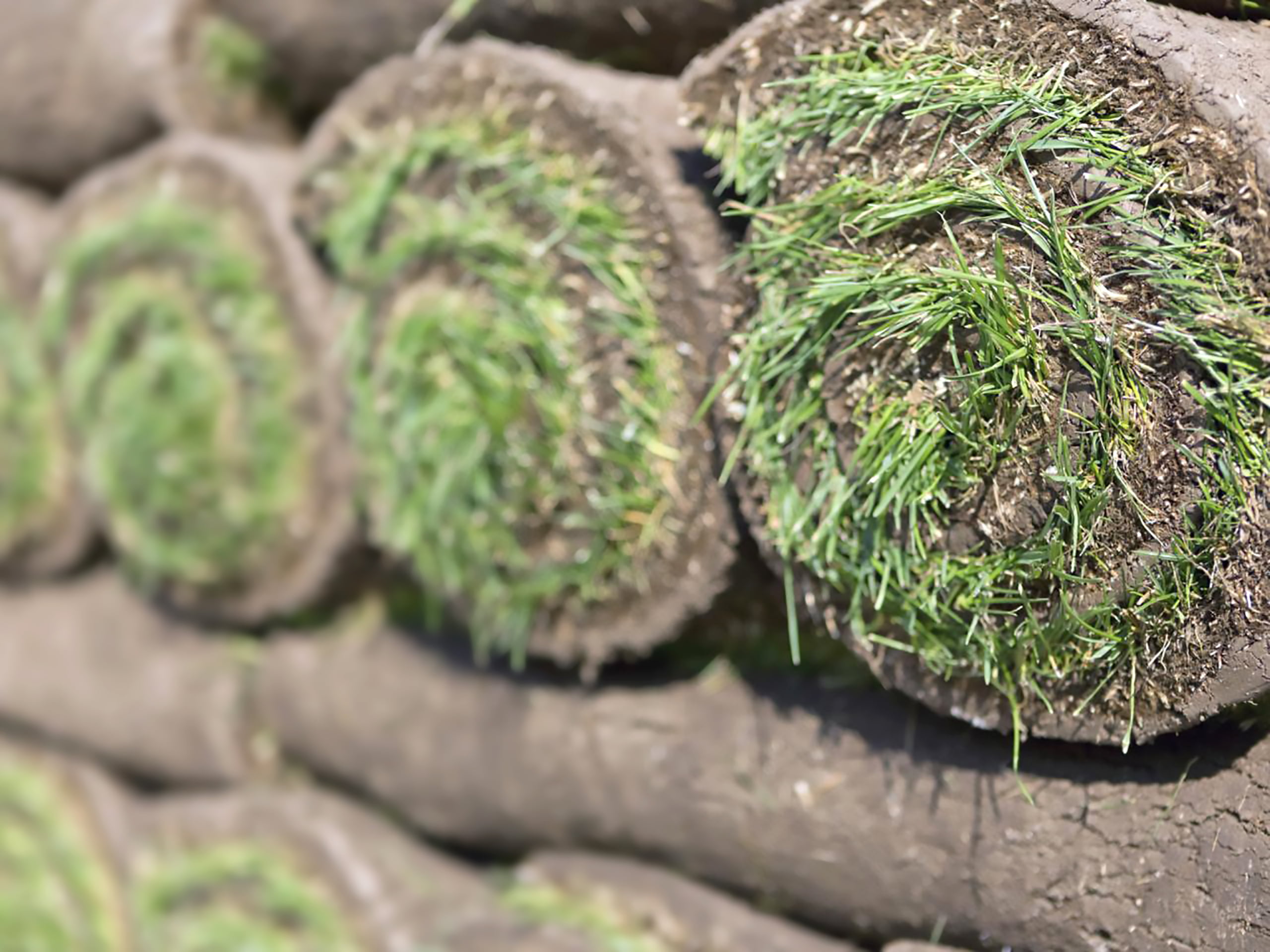
Grasses like St. Augustine and Zoysia grow via thick, horizontal runners called stolons. They create a dense, tightly woven mat that holds a lot of water and soil. Conversely, grasses like Fescue or Bermuda can be lighter, though this is not a universal rule.
When you order a specific grass type, you are also inherently selecting a certain soil and moisture profile that the grass prefers, which impacts the final pallet weight.
How Much Does A Pallet Of St. Augustine Sod Weigh Compared To Other Varieties?
When it comes to heavyweights, St. Augustine is in a class of its own.
A standard 450-500 sq. ft. pallet of St. Augustine sod often weighs between 2,800 and 3,500 pounds. Its broad leaves and thick stolons trap a massive amount of water. This grass is notoriously “thirsty,” and that property extends to its weight during transport.
In contrast, a pallet of Bermuda or Zoysia grass might weigh 10-20% less under the same conditions. What does this mean for your project? You must be even more conservative with your vehicle’s payload capacity when hauling St. Augustine.
The table below provides a quick comparison. These are estimates for a standard 500 sq. ft. pallet under “normal” moisture conditions (not bone-dry, not saturated).
| Grass Variety | Common Name(s) | Estimated Pallet Weight (500 sq. ft.) | Key Characteristics |
| St. Augustine | Palmetto, Raleigh | 2,800 – 3,500 lbs | Very high water retention; thick, dense mat. |
| Zoysia | Emerald, Zeon | 2,600 – 3,200 lbs | Very dense; holds soil and water well. |
| Bermuda | Tifway, Celebration | 2,400 – 3,000 lbs | Lighter, finer texture; often sold in larger rolls. |
| Fescue | Tall Fescue | 2,500 – 3,100 lbs | Common in cooler climates; weight is average. |
What Is The Average Weight Of A Pallet Of Sod?
If you are forced to use a single number for a rough estimate, the most widely accepted industry average weight for a pallet of sod is 2,500 pounds.
Be warned: using this average for logistical planning is risky.
It’s a midpoint, not a guarantee. If you plan for 2,500 pounds and the pallet that arrives is 3,200 pounds, your truck may be overloaded, your forklift may not meet the capacity, and your entire project timeline can be jeopardized. Always default to the higher end of the range.
What Vehicles Can Safely Carry A Pallet Of Sod?
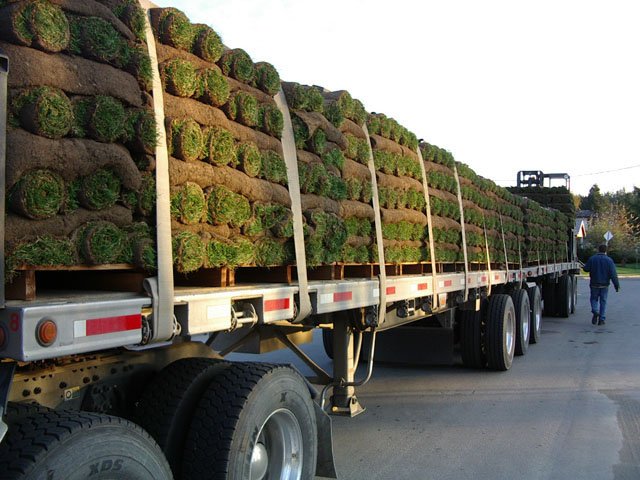
This is where planning meets reality. You must never attempt to transport a full pallet of sod in a car, an SUV, or a half-ton pickup truck (like a Ford F-150, Ram 1500, or Chevy 1500).
A half-ton truck’s “payload capacity” is the legal and safe amount of weight it can carry in its bed and cab. This is often only 1,500 to 2,000 pounds. A 3,000-pound pallet will dangerously overload the suspension, brakes, and tires.
To safely haul a full pallet of sod, you need a minimum of a three-quarter-ton heavy-duty truck.
Examples: Ford F-250, Ram 2500, or Chevy 2500.
Requirement: These trucks have the necessary payload capacity (typically 3,000-4,000+ lbs) and stronger brakes to handle the load.
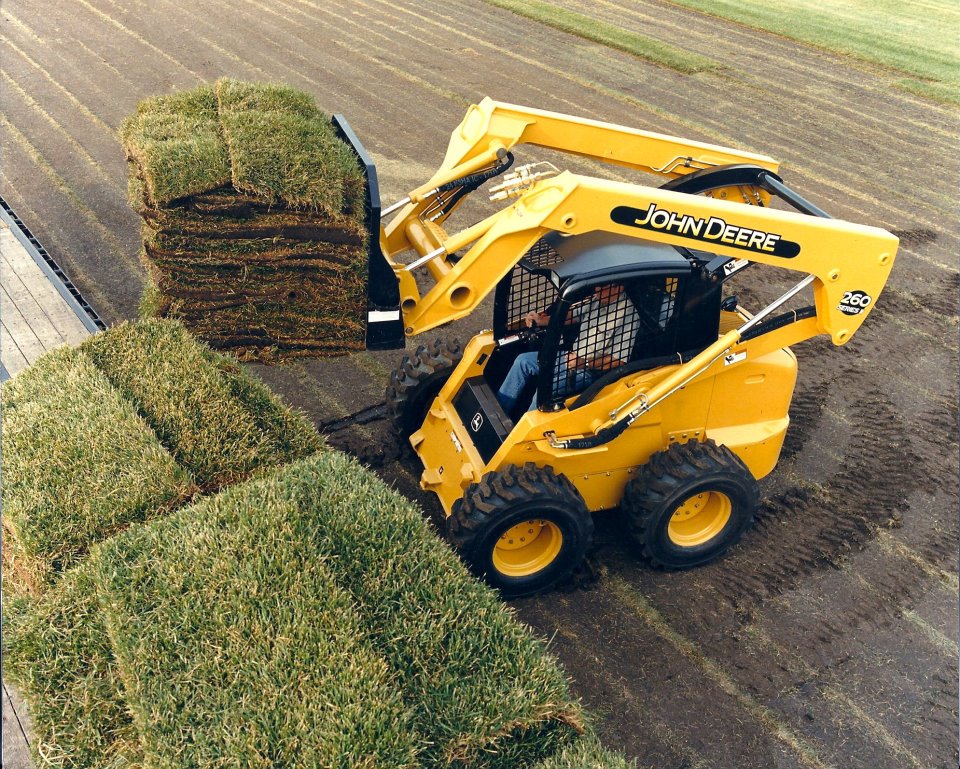
Even with the right truck, you need a forklift or skid steer at the destination to unload it. This is not a job for wheelbarrows.
| Vehicle Class | Common Examples | Typical Payload Capacity | Can it Haul a Full Sod Pallet? |
| SUV / Minivan | Explorer, Highlander | 1,200 – 1,600 lbs | No. Extremely Unsafe. |
| 1/2-Ton Truck | F-150, Ram 1500 | 1,500 – 2,200 lbs | No. Overloads suspension. |
| 3/4-Ton Truck | F-250, Ram 2500 | 3,000 – 4,200 lbs | Yes. This is the minimum requirement. |
| 1-Ton Truck | F-350, Ram 3500 | 4,000 – 7,500 lbs | Yes. Ideal for hauling. |
The risks of overloading are severe, from vehicle damage to catastrophic brake failure. For reliable, safe transport, it’s best to use a professional freight service.
Selling Point: Ensure a seamless delivery experience by letting us handle the heavy lifting! Contact us today to schedule professional sod delivery straight to your site and save your back!
How Much Does Sod Weigh Per Square Foot And Per Piece?
Breaking the weight down into smaller units is useful for planning smaller projects or calculating how many trips you might need with a smaller utility trailer.
Weight Per Square Foot: A single square foot of sod typically weighs between 5 and 8 pounds.
Weight Per Piece: A standard sod “piece” or “slab” (often 16×24 inches) weighs between 30 and 45 pounds.
These numbers are, again, highly dependent on moisture. A 45-pound-per-piece average is a safe bet for calculating physical labor. If you have to move 150 pieces, that’s a lot of manual work.
How Much Does 500 Square Feet Of Sod Weigh?
Using the per-square-foot calculation, we can get a reliable estimate.
If we use a conservative average of 6 pounds per square foot (to account for normal moisture), the math is simple:
500 sq. ft. x 6 lbs/sq. ft. = 3,000 pounds
This confirms our earlier pallet average. If the sod is particularly wet, you might use 7 or 8 pounds per square foot, which would bring the total to 3,500-4,000 pounds.
What Is The Average Weight Of A Roll Of Sod?
Sod doesn’t always come in small, flat pieces. For large commercial or athletic field installations, it is often delivered in large rolls.
A standard “small roll” might be 2 feet by 5 feet (10 sq. ft.) and weigh 40 to 60 pounds.
Larger “big rolls,” which require a special tractor to install, can be 4 feet wide and over 100 feet long, weighing thousands of pounds all by themselves. Always confirm the unit format with your supplier.
How Many Square Feet Of Sod On A Pallet And What Is The Coverage Area?
The most common pallet sizes offer between 400 and 500 square feet of sod coverage.
This is the standard for most residential and commercial projects. However, some suppliers, particularly those in different regions or dealing with specific grass types, may sell pallets with 600 or even 700 square feet.
Never assume the pallet size. Ask your supplier for the exact square footage to ensure you don’t order too much or, even worse, not enough.
How Many Pieces Of Sod Are On A Pallet?
The number of individual pieces depends on the size of each slab. A common slab size is 16 inches by 24 inches (2.67 sq. ft.).
On a 500 square foot pallet, you would have:
500 sq. ft. / 2.67 sq. ft. per piece = ~187 pieces
A 450 square foot pallet would have around 168 pieces. You can generally expect between 150 and 200 pieces on a standard pallet.
What Does A Half Pallet Of Sod Weigh And Cover?
Many suppliers will sell half pallets, which are ideal for smaller repairs or patching bare spots.
Coverage: A half pallet typically covers 200 to 250 square feet.
Weight: It will weigh approximately half as much as a full pallet, putting it in the 1,200 to 1,600 pound range.
While lighter, a 1,500-pound load is still too much for an SUV or small truck. A half-ton truck is usually sufficient for a half pallet, but you must check your vehicle’s payload capacity first.
Is There A Sod Weight Calculator To Help Determine Pallet Weight?
Yes, many landscaping suppliers and universities offer online sod weight calculators. These tools are helpful for getting a more precise estimate.
To use one, you will typically need to input:
Total Square Footage: How much area you need to cover.
Grass Type: (e.g., St. Augustine, Bermuda).
Moisture Level: A selection like Dry, Normal, or Saturated.
The calculator then uses pre-set data, like U.S. government soil surveys, to estimate the final tonnage. This is the best way to plan your freight needs without physically weighing the sod yourself.
Selling Point: Use our free, interactive Sod Weight and Coverage Calculator on our website to accurately plan your project and ensure you order the right amount—visit our ‘Tools’ section now!
Skip The Heavy Lifting—We Deliver Your Sod Straight To The Site.
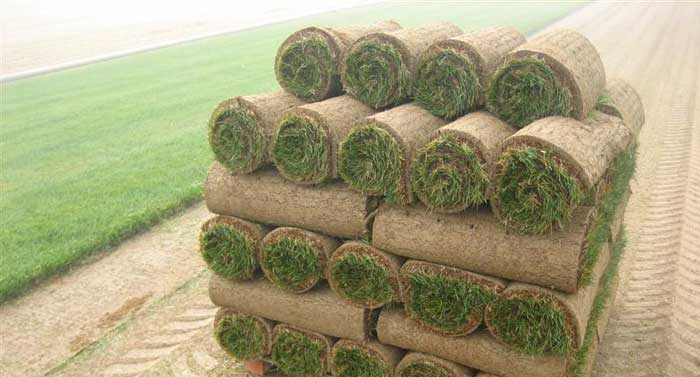
Our forklift-equipped delivery service saves you time, labor, and back strain. Sit back while we handle the heavy lifting for you.
Frequently Asked Questions About How Much Does A Pallet Of Sod Weigh?
This section addresses the most common questions from prospective bulk buyers and resellers.
How Much Does A Pallet Of Sod Weigh When It’s Wet Versus Dry?
This is the most critical variable. The difference is not small; it is massive. Water is heavy, weighing about 8.3 pounds per gallon. A sod pallet can absorb and hold dozens of gallons.
The table below shows a 500 square foot pallet of St. Augustine under three different conditions. Notice how the weight changes dramatically, even though the amount of grass is identical.
| Moisture Condition | Description | Estimated Weight (500 sq. ft. Pallet) |
| Dry | Harvested after a long dry spell. | ~2,200 lbs |
| Normal | Harvested with average soil moisture. | ~3,000 lbs |
| Saturated | Harvested immediately after heavy rain. | ~3,500 – 3,800+ lbs |
Always assume your pallet will be “Normal” or “Saturated.” It is far safer to plan for a 3,500-pound load and have it show up at 3,000 pounds than the other way around.
How Do You Transport A Pallet Of Sod Without A Forklift?
You don’t. At least, not as a single unit.
A pallet of sod is designed to be moved by a forklift or skid steer. If you do not have one at your delivery site, you have two options:
Manual Unloading: You must park the truck and unload the pallet piece by piece. This is extremely labor-intensive and must be done quickly. Sod is a living product and can die if left on the pallet for more than 24-48 hours (or just 12 hours in extreme heat).
Professional Delivery: The best option is to order from a supplier that offers forklift-equipped delivery. The truck will arrive, and a driver-operated forklift (like a moffett) will place the pallet exactly where you need it on the job site.
For a project of this weight and scale, managing the logistics correctly is the key to success. Don’t risk your vehicle or your health.
Stop guessing at freight costs and start planning your project with confidence. For an accurate, all-in quote on sod pallets, including professional freight delivery, contact the Bulk Pallet Sales team today.
How Much Does A Pallet Of Sod Weigh?
Knowing the answer to “how much does a pallet of sod weigh?” is the single most important step for planning your landscaping project. This isn’t just a trivial detail; it’s the critical piece of data that determines your freight costs, the truck you need for pickup, and the safety of your team.
Guessing wrong is a costly mistake. Showing up with a half-ton truck for a 3,000-pound load wastes a day. Overloading your vehicle can lead to dangerous driving conditions and expensive suspension damage.
This guide provides the definitive answer. We will break down the exact weight ranges, explain why the weight changes so drastically, and ensure you have the correct numbers to plan your project safely and efficiently.
By Bulk Pallets
- Created on October 20, 2025 Updated on November 04, 2025.
Share
Author
Key Takeaways
Before you fire up the truck, understand these critical points. Getting the weight wrong isn’t a small mistake; it’s a safety hazard and a costly project delay.
The Standard Range: A typical full pallet of sod (450-500 sq. ft.) weighs between 2,500 and 3,000 pounds. However, the full range can be anywhere from 1,500 to over 3,500 pounds.
Moisture is Everything: The single biggest variable is water. A dry pallet might weigh 2,000 pounds, while the exact same pallet, when saturated from rain, can easily exceed 3,000 pounds.
Vehicle Match: You cannot safely transport a full pallet of sod with a standard car, SUV, or even a half-ton pickup (like an F-150). You need a heavy-duty, three-quarter-ton (F-250) or one-ton (F-350) truck.
Grass Type Matters: Denser, water-loving grasses like St. Augustine will almost always be heavier than lighter varieties like Bermuda or Zoysia.
Always Verify: These numbers are industry estimates. The only way to know for sure is to contact your supplier and ask for the specific harvest weight before you dispatch a vehicle.
Table of Contents
How Much Does A Pallet Of Sod Weigh?
“How much does a pallet of sod weigh?” is the most critical logistical question for any landscaping project. The answer directly impacts your freight costs, vehicle choice, and job site safety.
A full, standard-sized pallet of sod, which typically covers 450 to 500 square feet, weighs between 2,500 and 3,000 pounds (1.25 to 1.5 tons).
However, a “dry” pallet harvested during a drought could weigh as little as 1,500 pounds, while a pallet saturated by recent rain can top 3,500 pounds. Never assume a single average. The weight is a dynamic number based on several key factors you must consider.
To help you visualize the most common pallet sizes and their corresponding weight ranges, we’ve broken them down. This data is essential for communicating with a freight broker or planning a pickup.
| Pallet Size (Coverage) | Typical Weight Range (Dry) | Typical Weight Range (Saturated) |
| Half Pallet (~250 sq. ft.) | 1,000 – 1,300 lbs | 1,400 – 1,700 lbs |
| Standard Pallet (450 sq. ft.) | 2,200 – 2,600 lbs | 2,800 – 3,200 lbs |
| Standard Pallet (500 sq. ft.) | 2,400 – 2,800 lbs | 3,000 – 3,500+ lbs |
| Large Pallet (600+ sq. ft.) | 2,800 – 3,200 lbs | 3,600 – 4,000+ lbs |
Get An Accurate Freight Quote Today—Avoid Overloads And Costly Delays.
Plan every delivery with confidence using our instant freight calculator. Know your total weight, cost, and ROI before your truck ever leaves the yard.
What Factors Influence The Final Weight Of A Pallet Of Sod?
It’s tempting to look for one simple answer, but the final weight on your bill of lading is a moving target. Four main variables determine if your pallet is on the light or heavy side of the average.
Moisture Content: This is the most significant factor. Sod is soil, and soil acts like a sponge. A pallet harvested after a heavy rainstorm can be up to 50% heavier than one harvested from a dry field.
Square Footage: Pallets are not universally standardized. While 450-500 sq. ft. is common, some suppliers stack up to 600 or 700 sq. ft. Always confirm the total coverage you are buying.
Soil Composition: The dirt holding the roots together matters. A sandy loam soil, common in coastal areas, is significantly lighter than dense, heavy clay soil found in other regions. According to university agricultural extensions, soil density is a major factor in weight.
Harvesting Method: The “cut” of the sod—how much soil is taken with the roots—is set by the supplier. A thicker cut provides more soil for the roots but adds significant weight to every single piece.
These factors work in combination. The heaviest possible pallet would be a 500 sq. ft. order of St. Augustine, cut thick from a clay field after a thunderstorm. The lightest would be a 450 sq. ft. pallet of Bermuda from a sandy field during a dry spell.
| Influencing Factor | Low Weight Impact (Lighter) | High Weight Impact (Heavier) |
| Moisture | Harvested dry (no recent rain) | Saturated (harvested after rain) |
| Soil Type | Sandy or loam-based soil | Dense clay-based soil |
| Sod Cut | Thin cut (less soil) | Thick cut (1+ inch of soil) |
| Grass Type | Fescue, Bermuda (less dense) | St. Augustine, Zoysia (dense) |
How Does The Type Of Grass Affect The Weight Of A Pallet Of Sod?
The grass species itself plays a key role. Different grasses have different growth habits, which dictates how they are farmed and harvested.
Grasses like St. Augustine and Zoysia grow via thick, horizontal runners called stolons. They create a dense, tightly woven mat that holds a lot of water and soil. Conversely, grasses like Fescue or Bermuda can be lighter, though this is not a universal rule.
When you order a specific grass type, you are also inherently selecting a certain soil and moisture profile that the grass prefers, which impacts the final pallet weight.
How Much Does A Pallet Of St. Augustine Sod Weigh Compared To Other Varieties?
When it comes to heavyweights, St. Augustine is in a class of its own.
A standard 450-500 sq. ft. pallet of St. Augustine sod often weighs between 2,800 and 3,500 pounds. Its broad leaves and thick stolons trap a massive amount of water. This grass is notoriously “thirsty,” and that property extends to its weight during transport.
In contrast, a pallet of Bermuda or Zoysia grass might weigh 10-20% less under the same conditions. What does this mean for your project? You must be even more conservative with your vehicle’s payload capacity when hauling St. Augustine.
The table below provides a quick comparison. These are estimates for a standard 500 sq. ft. pallet under “normal” moisture conditions (not bone-dry, not saturated).
| Grass Variety | Common Name(s) | Estimated Pallet Weight (500 sq. ft.) | Key Characteristics |
| St. Augustine | Palmetto, Raleigh | 2,800 – 3,500 lbs | Very high water retention; thick, dense mat. |
| Zoysia | Emerald, Zeon | 2,600 – 3,200 lbs | Very dense; holds soil and water well. |
| Bermuda | Tifway, Celebration | 2,400 – 3,000 lbs | Lighter, finer texture; often sold in larger rolls. |
| Fescue | Tall Fescue | 2,500 – 3,100 lbs | Common in cooler climates; weight is average. |
What Is The Average Weight Of A Pallet Of Sod?
If you are forced to use a single number for a rough estimate, the most widely accepted industry average weight for a pallet of sod is 2,500 pounds.
Be warned: using this average for logistical planning is risky.
It’s a midpoint, not a guarantee. If you plan for 2,500 pounds and the pallet that arrives is 3,200 pounds, your truck may be overloaded, your forklift may not meet the capacity, and your entire project timeline can be jeopardized. Always default to the higher end of the range.
What Vehicles Can Safely Carry A Pallet Of Sod?
This is where planning meets reality. You must never attempt to transport a full pallet of sod in a car, an SUV, or a half-ton pickup truck (like a Ford F-150, Ram 1500, or Chevy 1500).
A half-ton truck’s “payload capacity” is the legal and safe amount of weight it can carry in its bed and cab. This is often only 1,500 to 2,000 pounds. A 3,000-pound pallet will dangerously overload the suspension, brakes, and tires.
To safely haul a full pallet of sod, you need a minimum of a three-quarter-ton heavy-duty truck.
Examples: Ford F-250, Ram 2500, or Chevy 2500.
Requirement: These trucks have the necessary payload capacity (typically 3,000-4,000+ lbs) and stronger brakes to handle the load.
Even with the right truck, you need a forklift or skid steer at the destination to unload it. This is not a job for wheelbarrows.
| Vehicle Class | Common Examples | Typical Payload Capacity | Can it Haul a Full Sod Pallet? |
| SUV / Minivan | Explorer, Highlander | 1,200 – 1,600 lbs | No. Extremely Unsafe. |
| 1/2-Ton Truck | F-150, Ram 1500 | 1,500 – 2,200 lbs | No. Overloads suspension. |
| 3/4-Ton Truck | F-250, Ram 2500 | 3,000 – 4,200 lbs | Yes. This is the minimum requirement. |
| 1-Ton Truck | F-350, Ram 3500 | 4,000 – 7,500 lbs | Yes. Ideal for hauling. |
The risks of overloading are severe, from vehicle damage to catastrophic brake failure. For reliable, safe transport, it’s best to use a professional freight service.
Selling Point: Ensure a seamless delivery experience by letting us handle the heavy lifting! Contact us today to schedule professional sod delivery straight to your site and save your back!
How Much Does Sod Weigh Per Square Foot And Per Piece?
Breaking the weight down into smaller units is useful for planning smaller projects or calculating how many trips you might need with a smaller utility trailer.
Weight Per Square Foot: A single square foot of sod typically weighs between 5 and 8 pounds.
Weight Per Piece: A standard sod “piece” or “slab” (often 16×24 inches) weighs between 30 and 45 pounds.
These numbers are, again, highly dependent on moisture. A 45-pound-per-piece average is a safe bet for calculating physical labor. If you have to move 150 pieces, that’s a lot of manual work.
How Much Does 500 Square Feet Of Sod Weigh?
Using the per-square-foot calculation, we can get a reliable estimate.
If we use a conservative average of 6 pounds per square foot (to account for normal moisture), the math is simple:
500 sq. ft. x 6 lbs/sq. ft. = 3,000 pounds
This confirms our earlier pallet average. If the sod is particularly wet, you might use 7 or 8 pounds per square foot, which would bring the total to 3,500-4,000 pounds.
What Is The Average Weight Of A Roll Of Sod?
Sod doesn’t always come in small, flat pieces. For large commercial or athletic field installations, it is often delivered in large rolls.
A standard “small roll” might be 2 feet by 5 feet (10 sq. ft.) and weigh 40 to 60 pounds.
Larger “big rolls,” which require a special tractor to install, can be 4 feet wide and over 100 feet long, weighing thousands of pounds all by themselves. Always confirm the unit format with your supplier.
How Many Square Feet Of Sod On A Pallet And What Is The Coverage Area?
The most common pallet sizes offer between 400 and 500 square feet of sod coverage.
This is the standard for most residential and commercial projects. However, some suppliers, particularly those in different regions or dealing with specific grass types, may sell pallets with 600 or even 700 square feet.
Never assume the pallet size. Ask your supplier for the exact square footage to ensure you don’t order too much or, even worse, not enough.
How Many Pieces Of Sod Are On A Pallet?
The number of individual pieces depends on the size of each slab. A common slab size is 16 inches by 24 inches (2.67 sq. ft.).
On a 500 square foot pallet, you would have:
500 sq. ft. / 2.67 sq. ft. per piece = ~187 pieces
A 450 square foot pallet would have around 168 pieces. You can generally expect between 150 and 200 pieces on a standard pallet.
What Does A Half Pallet Of Sod Weigh And Cover?
Many suppliers will sell half pallets, which are ideal for smaller repairs or patching bare spots.
Coverage: A half pallet typically covers 200 to 250 square feet.
Weight: It will weigh approximately half as much as a full pallet, putting it in the 1,200 to 1,600 pound range.
While lighter, a 1,500-pound load is still too much for an SUV or small truck. A half-ton truck is usually sufficient for a half pallet, but you must check your vehicle’s payload capacity first.
Is There A Sod Weight Calculator To Help Determine Pallet Weight?
Yes, many landscaping suppliers and universities offer online sod weight calculators. These tools are helpful for getting a more precise estimate.
To use one, you will typically need to input:
Total Square Footage: How much area you need to cover.
Grass Type: (e.g., St. Augustine, Bermuda).
Moisture Level: A selection like Dry, Normal, or Saturated.
The calculator then uses pre-set data, like U.S. government soil surveys, to estimate the final tonnage. This is the best way to plan your freight needs without physically weighing the sod yourself.
Selling Point: Use our free, interactive Sod Weight and Coverage Calculator on our website to accurately plan your project and ensure you order the right amount—visit our ‘Tools’ section now!
Skip The Heavy Lifting—We Deliver Your Sod Straight To The Site.
Our forklift-equipped delivery service saves you time, labor, and back strain. Sit back while we handle the heavy lifting for you.
Frequently Asked Questions About How Much Does A Pallet Of Sod Weigh?
This section addresses the most common questions from prospective bulk buyers and resellers.
How Much Does A Pallet Of Sod Weigh When It’s Wet Versus Dry?
This is the most critical variable. The difference is not small; it is massive. Water is heavy, weighing about 8.3 pounds per gallon. A sod pallet can absorb and hold dozens of gallons.
The table below shows a 500 square foot pallet of St. Augustine under three different conditions. Notice how the weight changes dramatically, even though the amount of grass is identical.
| Moisture Condition | Description | Estimated Weight (500 sq. ft. Pallet) |
| Dry | Harvested after a long dry spell. | ~2,200 lbs |
| Normal | Harvested with average soil moisture. | ~3,000 lbs |
| Saturated | Harvested immediately after heavy rain. | ~3,500 – 3,800+ lbs |
Always assume your pallet will be “Normal” or “Saturated.” It is far safer to plan for a 3,500-pound load and have it show up at 3,000 pounds than the other way around.
How Do You Transport A Pallet Of Sod Without A Forklift?
You don’t. At least, not as a single unit.
A pallet of sod is designed to be moved by a forklift or skid steer. If you do not have one at your delivery site, you have two options:
Manual Unloading: You must park the truck and unload the pallet piece by piece. This is extremely labor-intensive and must be done quickly. Sod is a living product and can die if left on the pallet for more than 24-48 hours (or just 12 hours in extreme heat).
Professional Delivery: The best option is to order from a supplier that offers forklift-equipped delivery. The truck will arrive, and a driver-operated forklift (like a moffett) will place the pallet exactly where you need it on the job site.
For a project of this weight and scale, managing the logistics correctly is the key to success. Don’t risk your vehicle or your health.
Stop guessing at freight costs and start planning your project with confidence. For an accurate, all-in quote on sod pallets, including professional freight delivery, contact the Bulk Pallet Sales team today.