


Blog
The Ultimate Sod Calculator: Measure Twice, Order Once
Planning a new lawn is exciting, but that excitement can vanish if you make the most common mistake: ordering the wrong amount of sod for an unprepared yard.
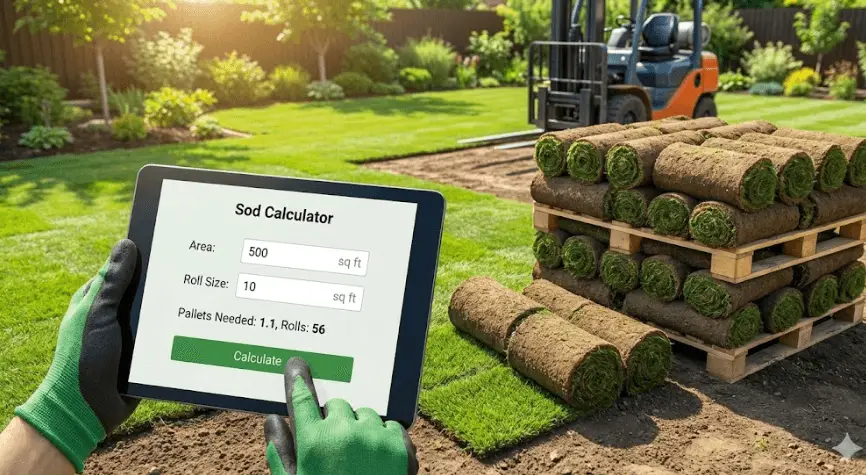
Sod Calculator
Area · Weight · Pallets · Rolls · Cost — all in one tool
Enter your supplier's pricing to get a cost estimate. Leave blank to skip.
Average US prices: Standard ≈ $150–250/pallet · Premium ≈ $250–400/pallet · Zoysia ≈ $200–350/pallet
Sod Weight Calculator
Estimate total sod weight, pallet count, and roll count for any project size.
Are You Ready for Sod Day? Take the 2-Minute Quiz
Ordering sod is easy. Installing it correctly is hard work. Find out if your yard — and your plan — are truly ready.
Before You Measure: Choose the Right Sod for Your Yard
Calculating the right amount of the wrong grass is a wasted effort. Use this table to match your yard’s conditions to the right sod type.
| Grass Type | Sun Requirement | Shade Tolerance | Foot Traffic | Drought Tolerance |
|---|---|---|---|---|
| Bermuda | Full Sun (8+ hrs) | Low | High | High |
| Zoysia | Full Sun / Light Shade | Medium | High | High |
| St. Augustine | Partial Shade (4-6 hrs) | High | Medium | Medium |
| Fescue | Partial Shade (4-6 hrs) | High | Medium-Low | Low-Medium |
How to Accurately Measure Your Yard for Sod
The classic carpenter’s rule, “measure twice, cut once,” is just as critical for sod. The accuracy of our calculator depends entirely on your measurements.
[Image: A "Common Lawn Shapes Cheat Sheet" graphic showing how to break down L-shapes, circles, and irregular curves into simple geometric forms.]
1. For Square or Rectangular Areas:
- Formula: Length x Width = Total Square Feet.
2. For Irregular Areas: Break them down into the simple shapes shown on our cheat sheet.
- Circles: Radius x Radius x 3.14 = Total Square Feet.
- Triangles: (Base x Height) / 2 = Total Square Feet.
Don’t Make These Common Measurement Mistakes:
- Forgetting to Subtract Hardscapes: This is the #1 error. Meticulously measure patios, walkways, pools, and driveways, and subtract that square footage from your total.
- Poorly Measuring Curves: For a gentle curve, lay a garden hose along the edge, then straighten it out and measure its length. For complex curves, break them into a series of smaller trapezoids.
- Ignoring Slopes: A steep slope has more surface area than a flat area of the same footprint. For a 2:1 slope, multiply the area by 1.12 to get a more accurate measurement.
Why You MUST Order 10% Extra Sod (The Overage Factor)
I cannot overstate this: Always order 10% more sod than your exact measurement. This is your project’s best insurance policy and a non-negotiable for every professional job. It covers cuts, angles, a potential bad roll, and gives you extra pieces for future repairs.
Your Sod Project Toolkit Checklist
Don’t get caught making multiple trips to the hardware store.
- Heavy-Duty Utility Knife (and extra blades)
- Work Gloves
- Wheelbarrow
- Garden Hose with Spray Nozzle
- Weighted Lawn Roller (Rental)
- Rototiller (Rental, for prep)
- Landscape Rake
- Shovel
DIY vs. Pro Installation: A Detailed Cost Breakdown (1,000 sq. ft. Example)
| Cost Item | DIY Approach | Professional Install |
|---|---|---|
| Sod (1,100 sq. ft.) | ~$600 | Included |
| Delivery Fee | ~$150 | Included |
| Soil Amendments | ~$120 | Included |
| Tool Rental | ~$100 | Included |
| Your Labor | 1-2 Full Days | 0 |
| TOTAL (Est.) | ~$970 | $1,500 – $2,500 |
The Labor and Time Estimator: How Much Work Is This?
Use this table to plan your installation day and recruit help accordingly.
| Square Footage | 1 Person | 2 People | 3 People |
|---|---|---|---|
| 500 sq. ft. | 4 – 5 hours | 2 – 2.5 hours | 1.5 hours |
| 1,000 sq. ft. | 8 – 10 hours | 4 – 5 hours | 3 hours |
| 2,000 sq. ft. | 2 Full Days | 8 – 10 hours | 6 hours |
Your Sod is Installed—Now What? The Critical First Month
Your work isn’t done. Follow this watering and care schedule religiously.
| Timeframe | Watering Instructions | Mowing/Traffic |
|---|---|---|
| Day 1 | Water heavily immediately after install until soggy. | None |
| Week 1 | Water lightly 2x daily (morning/afternoon). | Keep all traffic off. |
| Week 2 | Water deeply 1x daily (morning). | Mow on Day 10-14 (high setting). |
| Week 3 | Water deeply every other day. | Light traffic is okay. |
| Week 4+ | Water 1-2 times per week as needed. | Resume normal activity. |
Bonus: Get to Know Your Soil with the Jar Test
Want to be a true pro? Grab a glass jar, fill it 1/3 with soil from your yard, fill the rest with water, shake vigorously, and let it settle for 24 hours.
- Sandy Soil: A large layer of sand will settle first at the bottom.
- Clay Soil: The water will remain murky, with a fine layer of sediment on top.
- Loam (Ideal): You’ll see distinct layers of sand, silt, and a small amount of clay.
Common Terminology Glossary
- Amendment: Material (like compost) added to soil to improve it.
- Dormant: A natural state where grass is alive but not actively growing (e.g., in winter).
- Roll/Slab: A single, harvestable piece of sod.
- Thatch: A layer of dead and living shoots between the green grass and the soil.
How Much Does Sod Weigh Per Square Foot And Per Piece?
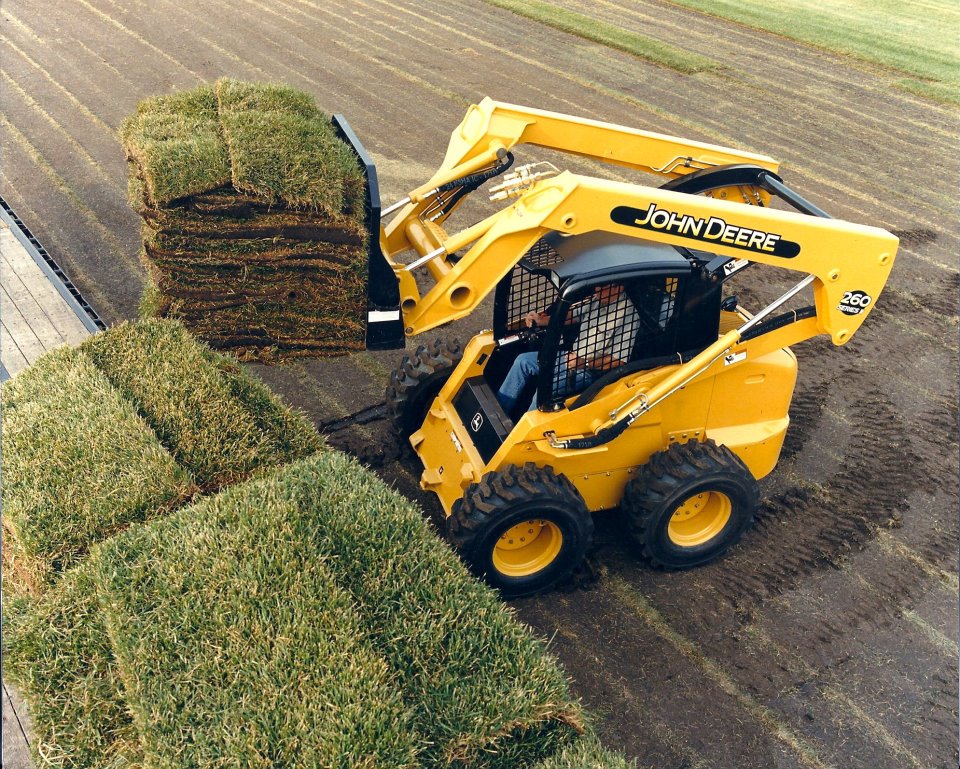
Breaking the weight down into smaller units is useful for planning smaller projects or calculating how many trips you might need with a smaller utility trailer.
Weight Per Square Foot: A single square foot of sod typically weighs between 5 and 8 pounds.
Weight Per Piece: A standard sod “piece” or “slab” (often 16×24 inches) weighs between 30 and 45 pounds.
These numbers are, again, highly dependent on moisture. A 45-pound-per-piece average is a safe bet for calculating physical labor. If you have to move 150 pieces, that’s a lot of manual work.
How Much Does 500 Square Feet Of Sod Weigh?
Using the per-square-foot calculation, we can get a reliable estimate.
If we use a conservative average of 6 pounds per square foot (to account for normal moisture), the math is simple:
500 sq. ft. x 6 lbs/sq. ft. = 3,000 pounds
This confirms our earlier pallet average. If the sod is particularly wet, you might use 7 or 8 pounds per square foot, which would bring the total to 3,500-4,000 pounds.
What Is The Average Weight Of A Roll Of Sod?
Sod doesn’t always come in small, flat pieces. For large commercial or athletic field installations, it is often delivered in large rolls.
A standard “small roll” might be 2 feet by 5 feet (10 sq. ft.) and weigh 40 to 60 pounds.
Larger “big rolls,” which require a special tractor to install, can be 4 feet wide and over 100 feet long, weighing thousands of pounds all by themselves. Always confirm the unit format with your supplier.
How Many Square Feet Of Sod On A Pallet And What Is The Coverage Area?
The most common pallet sizes offer between 400 and 500 square feet of sod coverage.
This is the standard for most residential and commercial projects. However, some suppliers, particularly those in different regions or dealing with specific grass types, may sell pallets with 600 or even 700 square feet.
Never assume the pallet size. Ask your supplier for the exact square footage to ensure you don’t order too much or, even worse, not enough.
How Many Pieces Of Sod Are On A Pallet?
The number of individual pieces depends on the size of each slab. A common slab size is 16 inches by 24 inches (2.67 sq. ft.).
On a 500 square foot pallet, you would have:
500 sq. ft. / 2.67 sq. ft. per piece = ~187 pieces
A 450 square foot pallet would have around 168 pieces. You can generally expect between 150 and 200 pieces on a standard pallet.
What Does A Half Pallet Of Sod Weigh And Cover?
Many suppliers will sell half pallets, which are ideal for smaller repairs or patching bare spots.
Coverage: A half pallet typically covers 200 to 250 square feet.
Weight: It will weigh approximately half as much as a full pallet, putting it in the 1,200 to 1,600 pound range.
While lighter, a 1,500-pound load is still too much for an SUV or small truck. A half-ton truck is usually sufficient for a half pallet, but you must check your vehicle’s payload capacity first.
Is There A Sod Weight Calculator To Help Determine Pallet Weight?
Yes, many landscaping suppliers and universities offer online sod weight calculators. These tools are helpful for getting a more precise estimate.
To use one, you will typically need to input:
Total Square Footage: How much area you need to cover.
Grass Type: (e.g., St. Augustine, Bermuda).
Moisture Level: A selection like Dry, Normal, or Saturated.
The calculator then uses pre-set data, like U.S. government soil surveys, to estimate the final tonnage. This is the best way to plan your freight needs without physically weighing the sod yourself.
Selling Point: Use our free, interactive Sod Weight and Coverage Calculator on our website to accurately plan your project and ensure you order the right amount—visit our ‘Tools’ section now!
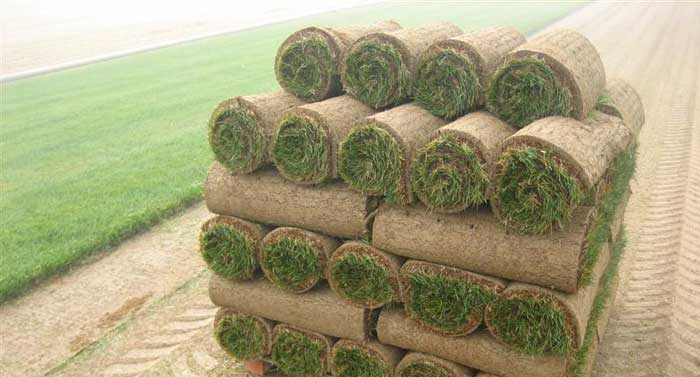
Skip The Heavy Lifting—We Deliver Your Sod Straight To The Site.
Our forklift-equipped delivery service saves you time, labor, and back strain. Sit back while we handle the heavy lifting for you.
Frequently Asked Questions About How Much Does A Pallet Of Sod Weigh?
This section addresses the most common questions from prospective bulk buyers and resellers.
How Much Does A Pallet Of Sod Weigh When It’s Wet Versus Dry?
How Do You Transport A Pallet Of Sod Without A Forklift?
How Much Does A Pallet Of Sod Weigh?
Knowing the answer to “how much does a pallet of sod weigh?” is the single most important step for planning your landscaping project. This isn’t just a trivial detail; it’s the critical piece of data that determines your freight costs, the truck you need for pickup, and the safety of your team.
Guessing wrong is a costly mistake. Showing up with a half-ton truck for a 3,000-pound load wastes a day. Overloading your vehicle can lead to dangerous driving conditions and expensive suspension damage.
This guide provides the definitive answer. We will break down the exact weight ranges, explain why the weight changes so drastically, and ensure you have the correct numbers to plan your project safely and efficiently.
By Bulk Pallets
- Created on October 20, 2025 Updated on November 04, 2025.
Share
Author

Key Takeaways
Before you fire up the truck, understand these critical points. Getting the weight wrong isn’t a small mistake; it’s a safety hazard and a costly project delay.
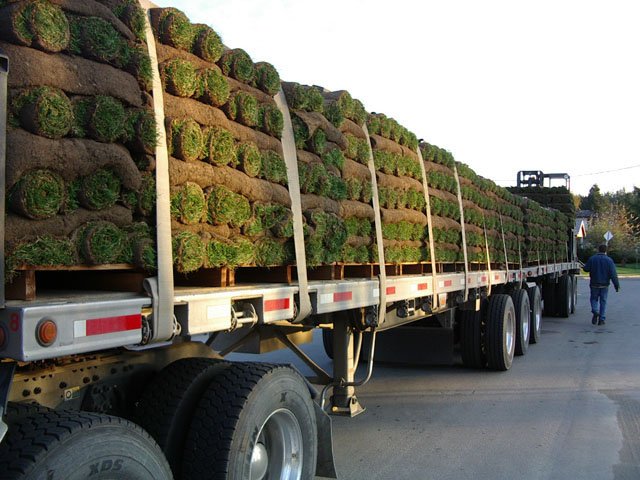
The Standard Range: A typical full pallet of sod (450-500 sq. ft.) weighs between 2,500 and 3,000 pounds. However, the full range can be anywhere from 1,500 to over 3,500 pounds.
Moisture is Everything: The single biggest variable is water. A dry pallet might weigh 2,000 pounds, while the exact same pallet, when saturated from rain, can easily exceed 3,000 pounds.
Vehicle Match: You cannot safely transport a full pallet of sod with a standard car, SUV, or even a half-ton pickup (like an F-150). You need a heavy-duty, three-quarter-ton (F-250) or one-ton (F-350) truck.
Grass Type Matters: Denser, water-loving grasses like St. Augustine will almost always be heavier than lighter varieties like Bermuda or Zoysia.
Always Verify: These numbers are industry estimates. The only way to know for sure is to contact your supplier and ask for the specific harvest weight before you dispatch a vehicle.